
COUNTING PETALS,SWELLING OPACITY
AUDIOVISUAL INSTALLATION: ANIMATED VIDEo LOOP, 3d PRINTED OBJECT series. 2026 /ongoing

Installation view of exhibition Swelling Petals, Counting Opacity, Vašulka Kitchen Brno.2026.

Pollen Trails. 3D printed object series with surface coating. 2026.

Photo by Táňa Drgonec Dižová


Photo by Táňa Drgonec Dižová

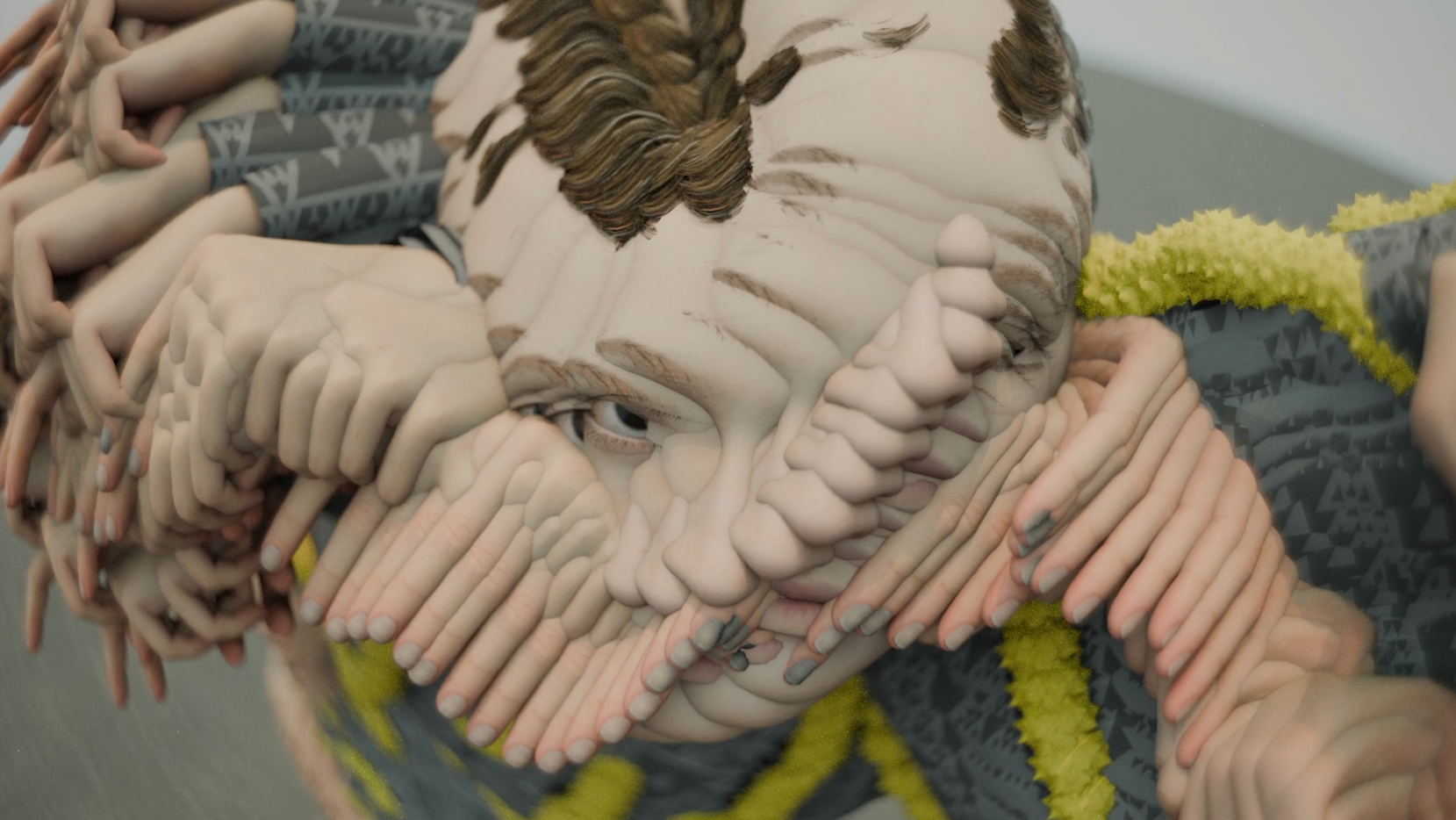


The audiovisual installation unfolds a speculative narrative about human and plant bodies under pervasive technological intervention. Fasciation, a growth anomaly caused by hormonal imbalance under environmental stress or herbicides, makes a plant appear as if its growth had been recorded in its own form. Its flattened, ribbon-like stem resembles a chronophotographic image, in which movement is broken into successive phases and laid over one another. Developed in the late 19th century to study and optimise bodies at work, in sport and in the army, chronophotography marks the beginning of the image techniques through which bodies are measured and governed.
In the double-sided video projection Counting Petals, Swelling Opacity (2026), a fictional researcher multiplies alongside a fasciated daisy. Whether the daisy multiplies the human body or the human animates the daisy remains unclear; perhaps both belong to a larger, invisible system inscribing itself into their bodies. Rather than explaining, the video unfolds through a poetic voiceover and visual metaphor, letting human, plant and machine blur into one another. The researcher’s movements are the author’s own, recorded with a motion capture suit while working at the computer. Piled up and fractured, they become a metaphor for fragmented attention, frustration and fatigue. The objects Pollen Trails (2026) and Cursor (2026), based on a 3D scan of a daisy pollen grain and the author’s motion capture recording, extend the video into space, stacking phases of movement into forms that can no longer be read as a sequence.
The daisy refers to Daisyworld, a 1983 hypothetical model in which daisies regulate a planet’s climate through a feedback loop. What happens to such a world once technology intervenes in the loop? The fasciated plant body becomes a site of failed regulation, carrying the system’s imbalance in its distorted growth. A similar loop runs through Deborah Levitt’s animatic apparatus: movement, broken into phases since chronophotography, now returns as images that shape behaviour. The work turns growth error and chronophotographic principle into a strategy: like fasciation, it lets the phases overgrow. Its motion-captured 3D character layers its movements until they become an excess the technology cannot process, swelling into opaque forms that resist being read, measured or optimised.
CREDITS: soundscape: Andrej Žabkay, video editing: Vladimíra Vrbiňáková, sound master: Adam Matej, technical support: Denis Kozerawski, 3D scan of a daisy pollen: Oliver Wilson (3D Pollen Project)


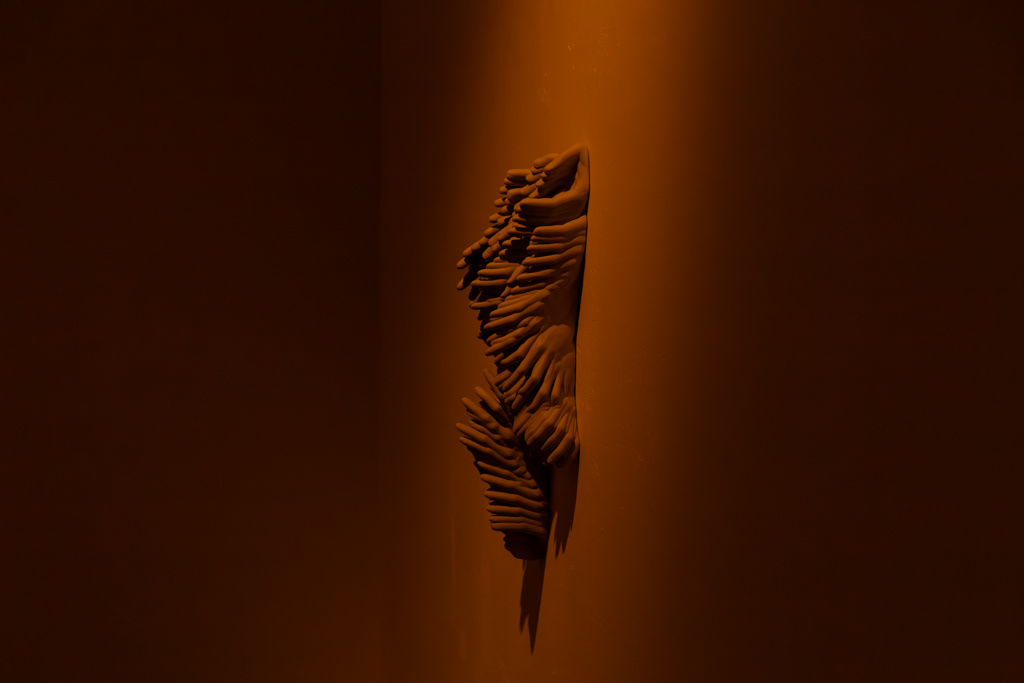
Cursor. 3D printed object with surface coating. 2026.
Pollen Trails (2026) and Cursor (2026) were made with support of Vašulka Kitchen Brno.